Quincy & Gadsden County, FL
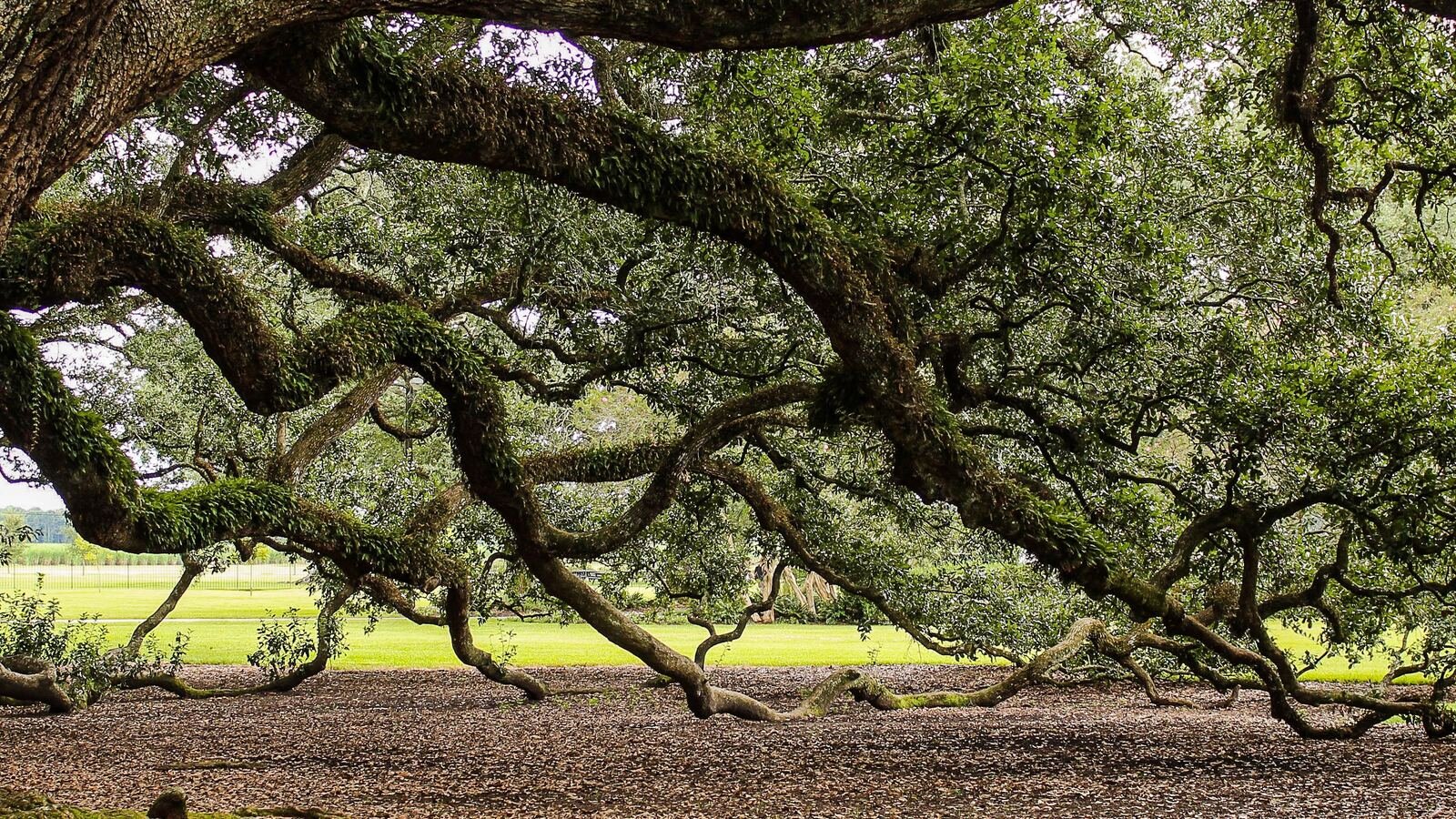
Quincy grew rich on shade-grown tobacco, and the same thing that shaded the tobacco still stands over its houses: big live oaks, laurel oaks, and farm-era pecans, many of them a century old. Removing one of these trees on the Red Hills’ clay terrain is a different job than dropping a pine on flat sand — slopes complicate rigging, clay complicates access, and the town’s historic district complicates everything else. Here’s how tree removal works in Quincy, which species are usually the problem, and what to sort out before a saw starts.
Who removes trees in Quincy, FL?
Licensed Gadsden-area crews experienced with large hardwoods on sloped clay lots: sectional takedowns of declining laurel oaks and brittle pecans, crane work over historic-district homes, and slope-aware equipment planning.
When a declining oak is close enough to the house that you’d rather not test another storm season, call (858) 319-0022 to reach the licensed local arborist you’re matched with for an on-site look.
Storm damage or a tree on your house? Call now.
Stay out of rooms under the tree and keep clear of downed lines — report those to the power company first. Then call and we’ll connect you with a local tree crew that handles storm work.
📞 Call (858) 319-0022Free 24/7 dispatch line · availability varies by storm volume
Which Quincy trees end up needing removal?
- Laurel oaks past 60 — the Big Bend’s signature decline species. They grow fast, hollow early, and Quincy’s older neighborhoods are full of them at exactly the wrong age. See why laurel oaks fail.
- Farm-era pecans — brittle wood, wide scaffolds, and decades of old storm wounds. When trunk cavities appear, they come down before they come apart.
- Water oaks — shorter-lived than they look; root and butt rot on clay soils is common by 50–70 years.
- Storm leaners — clay holds roots until it doesn’t; a soaked slope lets a full root plate rotate. A new lean after rain is a removal conversation.
- Live oaks, rarely — the strongest tree in the county; usually only removed for unmanageable decay or construction conflicts, and worth a second opinion first.
Slopes, clay, and where the crane parks
Quincy’s rolling terrain matters more than most homeowners expect. Cranes and bucket trucks need level, firm staging; on a sloped, rain-soft clay lot the practical answer is often mats, a longer-reach crane set on the street, or an all-climb takedown with pieces roped down — slower, but it protects both the lawn and the septic or irrigation lines under it. Access is a bigger cost driver here than tree height.
Do you need permission to remove a tree in Quincy?
Inside Quincy’s city limits, the city’s land development code protects certain trees — particularly larger hardwoods and anything in the historic district streetscape — and removals connected to development trigger review. A clearly dead or hazardous tree on private residential property is generally the straightforward case, but confirm with the city’s building and planning office before removing a large healthy oak, and expect stricter reading near the courthouse-square historic district. Outside city limits, Gadsden County’s rules apply instead. The regional permit guide explains how these local ordinances typically sort dead-and-hazardous from discretionary removals.
What does the removal itself look like?
For a big Quincy hardwood near a structure: climb or crane access, limbs rigged and lowered in sections, trunk blocked down last, then the wood either hauled or bucked to firewood length on request. A century oak is a full-day job with real tonnage — expect a crew, not a guy with a saw. The stump is separate: grinding runs 8–12 inches below grade so you can re-sod or replant; on old pecans with wide root flares that’s a bigger grind than people expect. Details at stump grinding in Quincy, and the pricing factors are broken down in the removal cost guide.
Removal or rehabilitation — which is right for an old shade tree?
Quincy’s canopy is part of why the town looks the way it does, and not every scarred oak needs to go. Sound trunks with isolated deadwood respond well to structural pruning; split unions on otherwise healthy trees can sometimes be cabled and braced; and a tree you’re unsure about deserves a health assessment before a removal decision. Where decay has hollowed the trunk past roughly a third of its diameter, though, no hardware fixes it — that tree is trading on borrowed time over your roof.
Quincy tree removal FAQs
How can I tell if my laurel oak is becoming dangerous?
Look for mushrooms or conks at the base, carpenter ants trailing into bark seams, thinning upper canopy, and big limbs dying back. Laurel oaks hollow from the inside out, so a healthy-looking shell can hide an empty core — an arborist’s resistance or sounding check settles it.
Can a crane reach a tree behind my house on a slope?
Often yes — from the street, with a longer boom. Where geometry rules it out, crews do an all-climb takedown and rope every piece down. It takes longer but works on almost any Quincy lot.
Is a permit needed to remove a dead tree in town?
Dead and hazardous trees are generally the straightforward case, but Quincy protects larger hardwoods and historic-district streetscape trees, so a quick confirmation with the city’s planning office before cutting a large tree is cheap insurance.
What happens to the wood?
Your choice: hauled away entirely, chipped for mulch on site, or bucked into rounds left for firewood. Hauling a large oak is a real cost component, so leaving wood on site trims the price.
Do you cover the rest of Gadsden County?
Yes — Quincy, Havana, Midway, Gretna, and Chattahoochee are all inside the network’s footprint, along with Havana and Midway specifically.
Serving Quincy and Gadsden County, FL. Content reviewed August 2026. Tallahassee Tree Service connects homeowners with independent licensed tree professionals and does not perform tree work directly.
Tallahassee Tree Service is a free referral service. Tallahassee Tree Service is not a licensed tree service provider and does not directly provide tree care services. All work is performed by independent, licensed and insured third-party providers in your area. Calls and form submissions placed through this site may be connected with a participating provider, and you may be contacted by that provider regarding your request. Same-day, emergency, and 24/7 availability are not guaranteed and depend on provider schedules, location, and demand. Service availability, pricing, licensing, and final response times are determined solely by the providers. It is the responsibility of the homeowner to verify that the hired contractor furnishes the necessary license and insurance required for the work being performed. All persons depicted in a photo or video are actors or models and not contractors listed on Tallahassee Tree Service.