Quincy & Gadsden County, FL
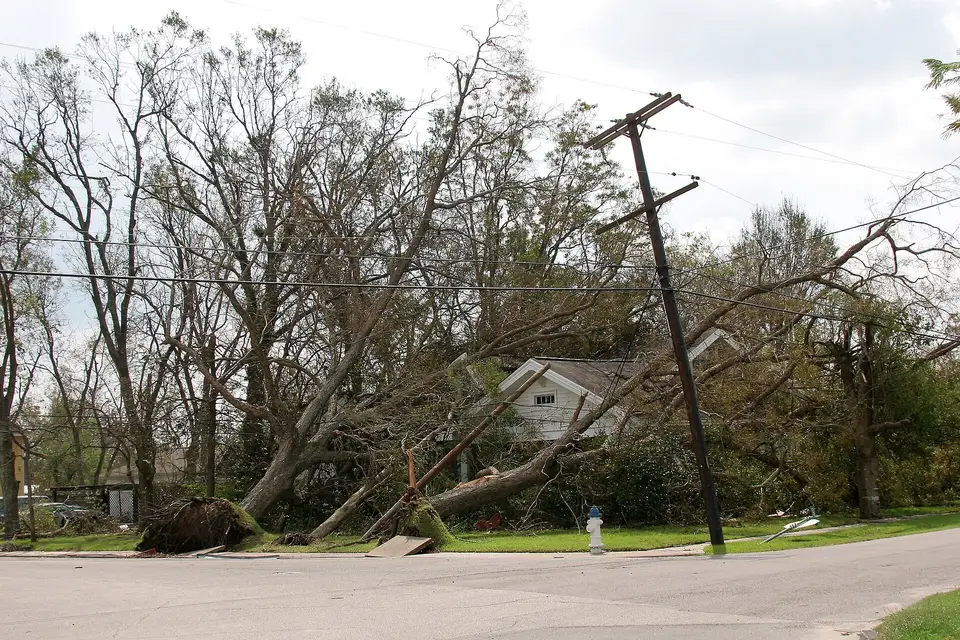
Gadsden County knows storm tree damage better than almost any inland county in Florida — Hurricane Michael crossed it in 2018 still carrying hurricane-force winds fifty miles from the coast, and Quincy’s big shade oaks and old pecans took the brunt. Storm damage removal here is different from routine takedowns: red-clay soil changes how trees fail, insurance is driving the timeline, and half-broken canopies are more dangerous than fully fallen ones. Here’s how post-storm removal works in Quincy, what fails first, and how to sequence cleanup without getting burned.
Who removes storm-damaged trees in Quincy, FL?
Licensed Gadsden-area crews handling post-storm work: oaks and pecans on structures, hung limbs (“widow-makers”) in shade canopies, uprooted trunks on saturated clay, and documented removals that hold up in an insurance file.
If a storm has put a tree on your home or blocked your street access, call (858) 319-0022 to reach the licensed local arborist you’re matched with — storm calls are triaged around the clock.
Storm damage or a tree on your house? Call now.
Stay out of rooms under the tree and keep clear of downed lines — report those to the power company first. Then call and we’ll connect you with a local tree crew that handles storm work.
📞 Call (858) 319-0022Free 24/7 dispatch line · availability varies by storm volume
How do Quincy trees fail in a storm?
Quincy sits on the Tallahassee Red Hills — rolling terrain with dense red clay under a thin topsoil cap. Clay grips roots far better than coastal sand, so Gadsden trees are less likely to topple whole and more likely to break: co-dominant leaders split at weak unions, over-extended oak limbs shear at the trunk, and old pecans — a legacy of the county’s farm era and famously brittle — shed scaffold limbs in almost every serious blow. The exception is a long soaking rain before the wind arrives: saturated clay turns greasy, and even well-anchored laurel oaks can rotate out with a full root plate. After Michael, both patterns were everywhere in Quincy’s historic district: snapped crowns on the courthouse-square oaks and windthrown pines on the town’s edges.
Which damaged trees have to come down — and which can be saved?
- Must go: trunks cracked through the main stem, trees that lost more than half the living crown, and uprooted trees with a lifted plate — on clay these never re-anchor.
- Usually salvageable: oaks that lost limbs cleanly at the branch collar, and pines with intact tops but stripped lower limbs. A structural prune beats removal; see prune vs. remove after a storm.
- Judgment calls: half-splits at a leader union can sometimes be cabled instead of removed — a real option for heritage oaks worth keeping. See cabling and bracing mature oaks.
The Gadsden insurance angle
Storm removal in Quincy usually runs through a homeowner’s policy when a structure is hit. Before any cutting: photograph the tree where it lies, the point of impact, and every damaged surface; save a piece of the failed wood if rot is visible (it documents pre-existing decay questions in your favor when the failure was wind, not neglect); and get the removal scope in writing from the crew you’re matched with. The storm claim checklist covers the full sequence.
Why are hung limbs more urgent than fallen ones?
A tree on the ground has finished failing. A shattered limb hung sixty feet up in a live oak canopy hasn’t — and Quincy’s shade streets hold a lot of canopy over sidewalks, driveways, and roofs. Crews call them widow-makers because they drop without wind, days after the storm, when fibers finally let go. Post-storm sequencing in Gadsden runs: occupied-structure strikes first, hung limbs over traffic areas second, ground debris last. If your yard looks “fine except for that one dangling branch,” that branch is the emergency — the branch and hanger removal guide explains the rigging.
What does storm cleanup cost depend on in Quincy?
Scope drives everything: whether the tree is on a structure (rigging and crane time), trunk diameter, how many trees, and access on wet clay — heavy equipment ruts saturated Gadsden ground badly, so mats or a longer crane reach sometimes replace driving to the tree. Debris volume matters too; a mature water oak produces a surprising tonnage of wood. The pro you’re matched with prices it on-site in writing. For the factors in detail, see how removal pricing works, and for the wider recovery playbook, the Tallahassee storm damage removal guide.
Quincy storm damage FAQs
A limb is hanging in my oak but nothing fell. Is that urgent?
Yes — hung limbs are the classic post-storm injury in Quincy’s shade canopies and they drop without warning. Keep people and cars from under the tree and have it rigged down promptly.
My pecan lost two big limbs. Should the whole tree go?
Not automatically. Pecans are brittle and shed scaffold limbs in most major storms; if the trunk and remaining unions are sound, a cleanup prune can buy years. If the breaks tore into the trunk wood, removal is usually the safer call.
The tree fell but missed the house. Will insurance still pay?
Often not — most Florida policies cover removal when a structure or covered item is damaged or access is blocked. A tree flat in the yard is usually homeowner expense. Confirm against how Florida policies treat tree removal.
How soon after a storm can a crew reach Quincy?
Structure strikes and blocked egress get triaged first, typically within the first day or two even in a wide event; yard debris queues behind. Calling with an accurate description of species, size, and what it’s resting on speeds the match.
Do you also handle the stumps afterward?
Yes — windthrown trees leave a tipped root plate and crater that grinding levels out. That’s scheduled follow-up work; see stump grinding in Quincy.
Serving Quincy and Gadsden County, FL. Content reviewed August 2026. Tallahassee Tree Service connects homeowners with independent licensed tree professionals and does not perform tree work directly.
Tallahassee Tree Service is a free referral service. Tallahassee Tree Service is not a licensed tree service provider and does not directly provide tree care services. All work is performed by independent, licensed and insured third-party providers in your area. Calls and form submissions placed through this site may be connected with a participating provider, and you may be contacted by that provider regarding your request. Same-day, emergency, and 24/7 availability are not guaranteed and depend on provider schedules, location, and demand. Service availability, pricing, licensing, and final response times are determined solely by the providers. It is the responsibility of the homeowner to verify that the hired contractor furnishes the necessary license and insurance required for the work being performed. All persons depicted in a photo or video are actors or models and not contractors listed on Tallahassee Tree Service.